
Click the icon to add a specified price to your Dashboard list. This makes it easy to keep track on the prices that matter most to you.

Idemitsu Kosan Co., Ltd. has made an investment in Quaise Energy, Inc. through its wholly owned subsidiary Idemitsu Americas Holdings Corporation. Quaise is developing millimeter-wave drilling technology1 to target deeper depths and hotter temperatures to deliver stable geothermal power. Through this investment, Idemitsu will advance the acquisition of knowledge on next-generation geothermal technologies and consider participating in geothermal projects developed by Quaise.
Millimeter-wave drilling technology: Irradiating millimeter waves to heat and melt rock. Enables ultra-high-temperature and ultra-deep drilling, typically difficult with conventional mechanical drills.
Geothermal power generation uses the energy of high-temperature water and steam heated by underground magma and other sources. Unlike other renewable energy sources such as solar and wind, geothermal can generate electricity stably without being affected by weather conditions. Japan has an abundance of geothermal resources, and as energy demand is expected to grow rapidly, geothermal power is attracting attention as a relatively low-cost, clean power source that contributes to decarbonization. Quaise is developing a proprietary millimeter-wave drilling technology that is expected to be applied in next-generation geothermal systems, such as Enhanced Geothermal Systems (EGS)2 . Millimeter-wave drilling technology aims to reach ultra-high-temperature zones of 300–500°C and depths of up to 20 km. When compared with conventional technologies (depth: 1–2 km; 100–200°C), millimeter-wave drilling significantly increases the energy output obtained from the same drilling location.
This enables increased power generation capacity per site, reducing construction and operating costs through consolidation of facilities. In addition, while conventional geothermal uses naturally occurring hot water and steam underground, next-generation geothermal technologies create artificial fractures in deep, high-temperature rock formations and circulate water to extract heat. As a result, development is less dependent on underground hot water or steam, easing site-condition constraints. These advantages will contribute to improved energy security.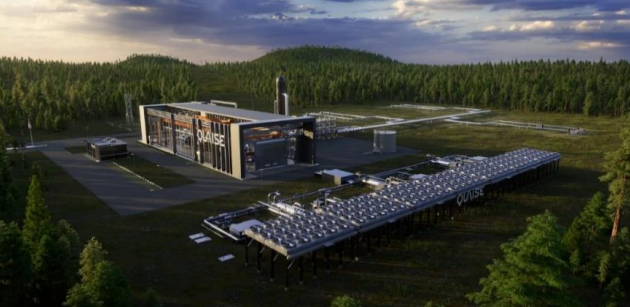
Idemitsu has been engaged in geothermal resource development since the first oil shock in 1973. In Oita Prefecture, Idemitsu started the steam supply business for Kyuden Mirai Energy Co., Inc.'s Takigami Power Station in 1996, and commenced the sole operation of the Takigami Binary Power Plant in 2017. In addition, Idemitsu is jointly constructing a geothermal power plant in Akita Prefecture. Geothermal energy is one of Idemitsu’s priorities for lowcarbon businesses through FY2030, as outlined in its Medium-term Management Plan (FY2026–FY2030) announced in May 2026. Through collaboration with Quaise, Idemitsu will further consider participation in next-generation geothermal power generation projects.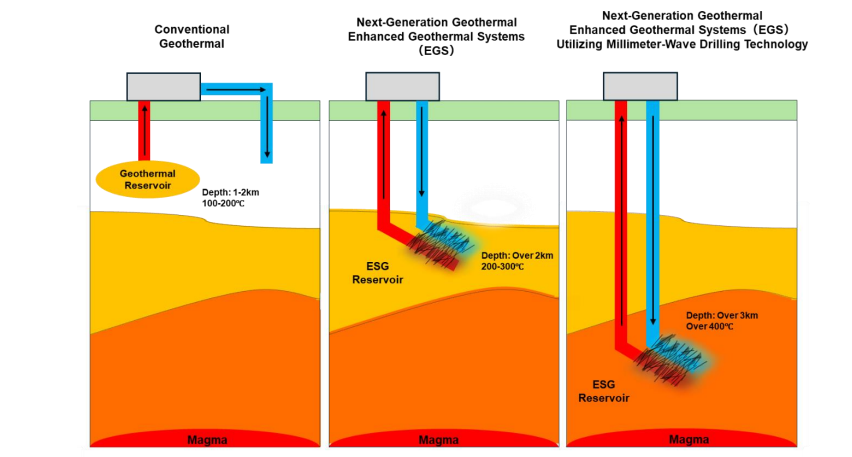
Comment from Keitaro Sugihara, President and CEO of IAH: By combining Idemitsu’s resource development expertise with Quaise’s millimeter-wave technology, we will strengthen energy security worldwide. Our investment in Quaise will accelerate the development of next-generation geothermal technologies, an important step towards delivering stable energy supply.
Comment from Carlos Araque, CEO and President of Quaise: We welcome Idemitsu as a strategic investor for developing more powerful, economic geothermal worldwide with our millimeter-wave technology. Idemitsu brings decades of experience in resource development and geothermal operations for a shared goal of delivering reliable, affordable, and sustainable energy on a global scale.
Enhanced Geothermal Systems (EGS):
Geothermal technology that creates artificial fractures in hightemperature, underground rock formations and circulates water to recover thermal energy. EGS does not depend on natural hydrothermal resources, expanding potential developable areas for geothermal power generation compared to conventional methods.
Quaise Energy builds geothermal power plants that generate electricity from the Earth’s natural heat. Their millimeter wave technology can access superhot rock, producing up to 10 times more power than conventional geothermal systems. By targeting unprecedented temperatures and depths, Quaise can deliver clean, stable power within a short distance of every major population and industrial center on the planet.
Note: This story has not been edited by The Polymerupdate Editorial team and is auto-generated from a syndicated feed.
