
Click the icon to add a specified price to your Dashboard list. This makes it easy to keep track on the prices that matter most to you.

Pertamina's commitment to reducing carbon emissions now extends to the maritime sector. By installing a solar power plant on the oil barge (OB) Patra 2303, owned by PT Pertamina Trans Kontinental, the company has been able to reduce emissions by up to 79.2 tons of CO₂ per year while simultaneously reducing diesel fuel consumption.
This step is part of Pertamina's efforts to expand the use of clean energy throughout its business chain, including the national energy distribution support fleet, which has so far relied on fossil fuels.
The installation and operation of the solar power system was carried out at a shipyard in Pangkal Pinang, Bangka Belitung.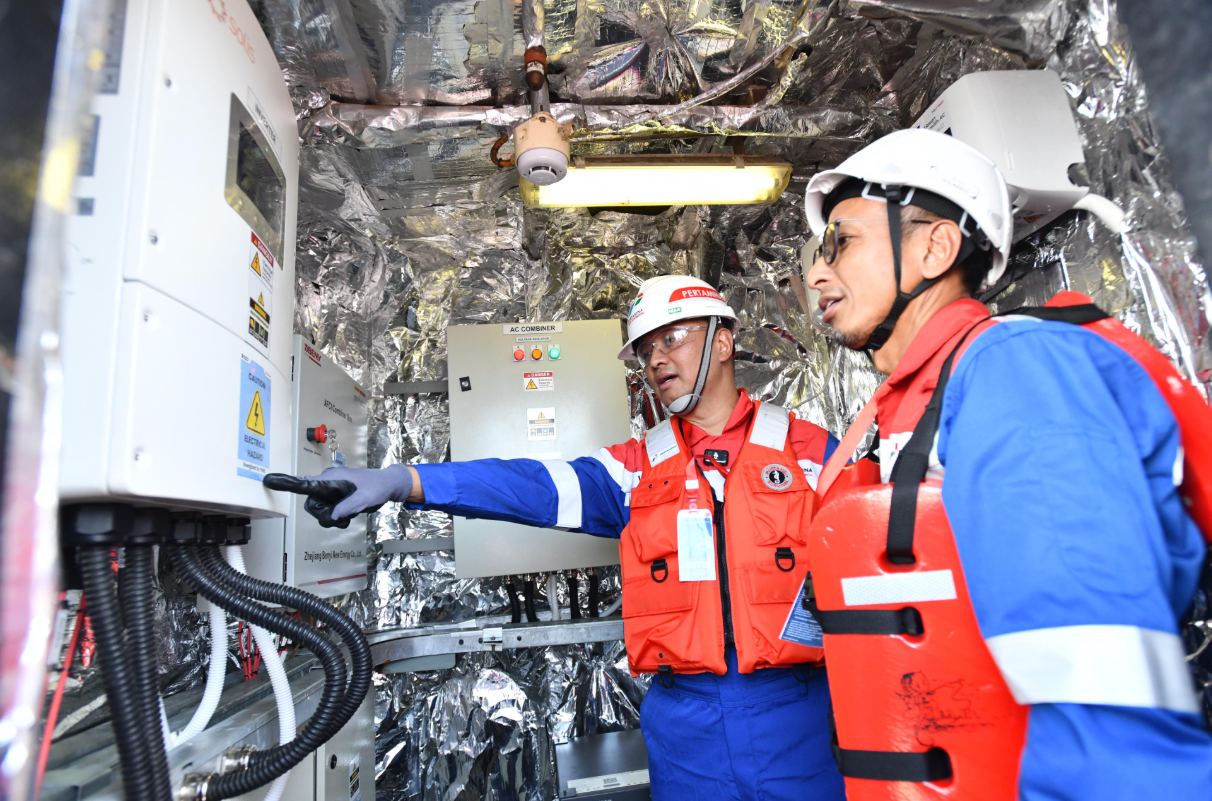
Pertamina's Director of Business Transformation and Sustainability, Agung Wicaksono, who directly monitored the activity, said that the application of solar energy on ships shows that efforts to reduce fossil-based fuels can be carried out not only on land, but also at sea.
"The use of solar energy combined with batteries demonstrates that dedieselization can be carried out not only on land but also at sea. This demonstrates Pertamina's readiness to support the acceleration of the energy transition," said Agung.
Agung emphasized that the project is part of Pertamina's journey towards achieving Net Zero Emissions by 2060 or sooner through various emission reduction programs across the company's business lines.
Agung also stated that this project is a concrete example of synergy between Pertamina entities. The collaboration between PNRE, the developer of renewable energy solutions, and PTK, the fleet operator, supported by PIS, the parent company, has enabled innovations that deliver operational benefits while supporting the national energy transition target.
Meanwhile, the President Director of PT Pertamina New & Renewable Energy (PNRE), John Anis, revealed that the system implemented uses an off-grid PLTS with a capacity of 11.5 kWp integrated with a Battery Energy Storage System (BESS) with a capacity of 32 kWh.
John said that the energy generated by solar panels is used to support the power needs of the ship's auxiliary engine so that some of the diesel usage can be replaced by renewable energy.
"The solar power plant on the OB Patra 2303 can replace the energy needs for up to six hours of ship operation. This implementation significantly reduces fuel consumption," said John.
Based on the company's calculations, the system has the potential to save up to 28.08 kiloliters of diesel per year.
The implementation of solar power plants on OB Patra 2303 also proves that renewable energy has a significant potential to support more environmentally friendly maritime transportation operations while strengthening the national decarbonization agenda.
Similarly, PIS Business Planning Director Eka Suhendra added that the project represents a significant milestone in Pertamina's maritime decarbonization strategy. In addition to implementing various energy-saving devices across the fleet, the use of solar energy is seen as opening new opportunities for lower-carbon shipping operations.
"The success of this project demonstrates that the energy transition can be achieved through collaboration, innovation, and the courage to introduce new technologies," Eka concluded.
Note: This story has not been edited by The Polymerupdate Editorial team and is auto-generated from a syndicated feed.
