The United States has intensified its economic offensive against Iran by sanctioning four Indian companies under President Donald Trump's Operation Economic Outcast for their alleged involvement in the trade of Iranian petroleum and petrochemical products. The move marks one of Washington's strongest actions yet against entities accused of helping Iran sustain its energy revenues, while raising the threat of secondary sanctions for global businesses, with India among the countries facing heightened scrutiny.
The sanctions, announced on August 24 target customs brokers, importers and intermediaries allegedly linked to Iranian-origin petroleum shipments. The move forms part of a broader campaign that also blacklists 60 individuals, companies and vessels across multiple jurisdictions, including the UAE, China, Hong Kong, Singapore and Europe. US Treasury Secretary Scott Bessent described the initiative as an unprecedented effort to sever Iran's financial lifelines and warned that countries and businesses continuing commercial dealings with Tehran face the risk of losing access to the US dollar system.
"Every country has a defined timeline to wind down activities identified by the United States," Bessent said while announcing the measures, adding that entities facilitating money laundering or financial transactions on Iran's behalf would be removed from the dollar-based financial network.
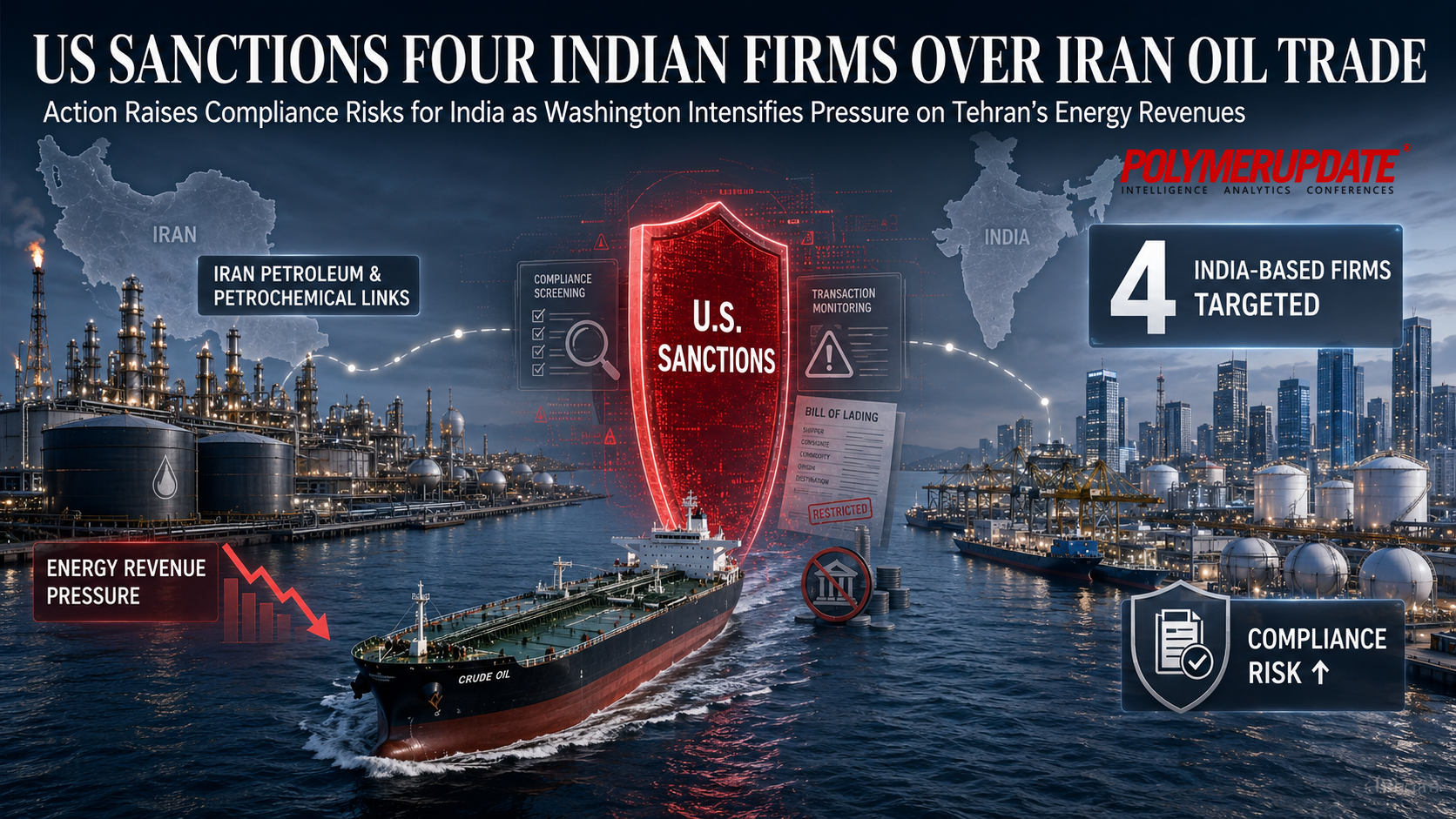 Four Indian companies designated
The US State Department named Portease Partners LLP, Sadashiva Overseas Ltd., PP Softtech Pvt. Ltd. and Prakrutees Infra Impex India Pvt. Ltd. as designated entities for their alleged roles in importing Iranian petroleum or petrochemical products into India. According to the US Treasury, Mumbai-based customs broker Portease Partners facilitated multiple shipments of Iranian petrochemical products entering India. Its designated partners, Indrismiya Asharafmiya Shekh and Harish Ramchandra Rangi, were also individually sanctioned.
Sadashiva Overseas was accused of importing approximately US$69 million worth of Iranian-origin petroleum products between February 2024 and June 2025. PP Softtech allegedly imported nearly US$25 million worth of Iranian petroleum products between January 2024 and June 2025, while its director Prashant Garg was also designated. Prakrutees Infra Impex was identified as importing around US$25 million worth of Iranian-origin petroleum products between May 2023 and February 2026. The Treasury alleged that the company sourced material from multiple suppliers, including Bonjoure Commodity F.Z.E., an entity already under US sanctions.
Under the sanctions, all property and financial interests of the designated individuals and companies that fall within US jurisdiction are frozen, effectively blocking access to assets held in the United States or controlled by US persons. The measures also prohibit American citizens, businesses and financial institutions from engaging in transactions with the sanctioned entities unless specifically authorised by the US government, significantly restricting their access to the global dollar-based financial system.
Economic pressure replaces military escalationThe sanctions represent a significant shift in Washington's strategy as the six-month-long Middle East conflict remains locked in a military stalemate. With peace negotiations stalled and Iran continuing to restrict commercial traffic through the Strait of Hormuz, the Trump administration is increasingly relying on economic pressure to weaken Tehran. Beyond oil, the expanded sanctions framework extends to Iran's digital assets, technology, precious metals, aviation and shipping industries. The objective is to disrupt every major source of foreign currency available to the Iranian government.
Washington has also broadened the scope of secondary sanctions, allowing penalties against foreign companies that facilitate Iranian trade even if they have no direct presence in the United States. Such measures can effectively isolate businesses from international banking because of the dominant role of the US dollar in global trade settlements.
India caught in a delicate positionIndia now finds itself balancing strategic ties with both Washington and Tehran. Although bilateral trade with Iran has declined substantially over recent years, the country remains among Tehran's important trading partners. According to India's Department of Commerce, bilateral merchandise trade stood at approximately US$1.6 billion during the financial year ending March 2026, down from US$2.3 billion three years earlier. India's exports largely comprise rice, tea, sugar and pharmaceuticals, while imports are dominated by dry fruits and agricultural products.
The relationship became more complicated in April this year when India resumed limited crude oil imports from Iran after a seven-year interruption, following a temporary US waiver on Iranian crude exports. That window now appears increasingly uncertain as Washington threatens sanctions against any entity purchasing Iranian energy. While the latest sanctions do not directly target Indian refiners, industry observers say the warning significantly raises compliance risks for traders, logistics providers and financial institutions involved in cross-border commerce with Iran.
China remains Iran's biggest lifelineChina is expected to remain the principal focus of Washington's sanctions strategy. It accounts for nearly 90 per cent of Iran's crude oil exports and is Tehran's largest overall trading partner. Official Chinese data recorded bilateral trade of US$9.96 billion in 2025, although US agencies estimate that unreported Iranian crude exports to China were worth an additional US$31.2 billion.
Energy intelligence firm Kpler estimates that China imported an average of 1.38 million barrels per day of Iranian crude during 2025. Much of the oil is reportedly purchased by independent Chinese refiners and rebranded as Malaysian or Indonesian crude before entering supply chains through intermediaries operating outside the dollar payment system. Beijing has consistently rejected unilateral US sanctions, maintaining that it will protect its commercial interests and continue legitimate trade with Iran.
Gulf trade routes under renewed scrutinyThe sanctions also come amid growing geopolitical tensions across the Gulf. The United Arab Emirates, historically one of Iran's largest commercial gateways, recently suspended trade and financial transactions with Tehran after missile attacks targeted Emirati territory and UAE-owned tankers. The UAE previously accounted for around US$28 billion in bilateral trade with Iran and served as a critical hub for transshipment, banking and re-export activities. US policymakers have long argued that tightening oversight in Dubai's financial system is essential to disrupting Iran's shadow trade networks.
Turkey and Iraq also remain deeply connected to Iran's economy through their energy ties. Turkey continues to import substantial volumes of Iranian natural gas despite ongoing efforts to diversify its energy sources, while Iraq relies heavily on Iranian gas and electricity to meet a significant share of its power generation needs. Analysts warn that tighter US secondary sanctions could complicate Baghdad's annual payments of an estimated US$4–5 billion for Iranian energy, potentially disrupting an already fragile regional energy supply chain.
Global implicationsFor businesses across Asia and the Middle East, the latest US action sends a clear signal that compliance expectations are expanding well beyond direct oil purchases. Customs brokers, shipping companies, insurers, traders and payment intermediaries now face greater exposure to secondary sanctions if linked to Iranian commerce.
As Washington escalates its campaign of economic isolation, companies engaged in cross-border petrochemical trade are likely to reassess supply chains, payment mechanisms and counterparties. For India, the sanctions underscore the growing challenge of maintaining commercial engagement with Iran while safeguarding access to the global dollar-based financial system—a balancing act that is becoming increasingly difficult as geopolitical tensions deepen.
DILIP KUMAR JHA
Editor
dilip.jha@polymerupdate.com



