State-owned Oil and Natural Gas Corporation (ONGC) reported its strongest-ever quarterly performance in the April–June quarter (Q1) of FY2026-27, with standalone net profit more than doubling to Rs 17,034 crore, marking a 112.3 percent increase from Rs 8,024 crore in the corresponding quarter of the previous fiscal year. The company's standalone gross revenue also recorded robust growth, rising 45.2 percent year-on-year to Rs 46,460 crore from Rs 32,003 crore, reflecting a sharp improvement in earnings during the quarter.
The strong financial performance was underpinned by a record quarterly profit before tax (PBT) of Rs 22,848 crore, driven primarily by higher crude oil prices and supported by improved operational performance. The results, approved by ONGC's Board of Directors at its 413th meeting held on August 4, highlight the significant gains accrued from the rally in international crude oil prices during the quarter, reinforcing the company's position as India's largest upstream oil and gas producer.
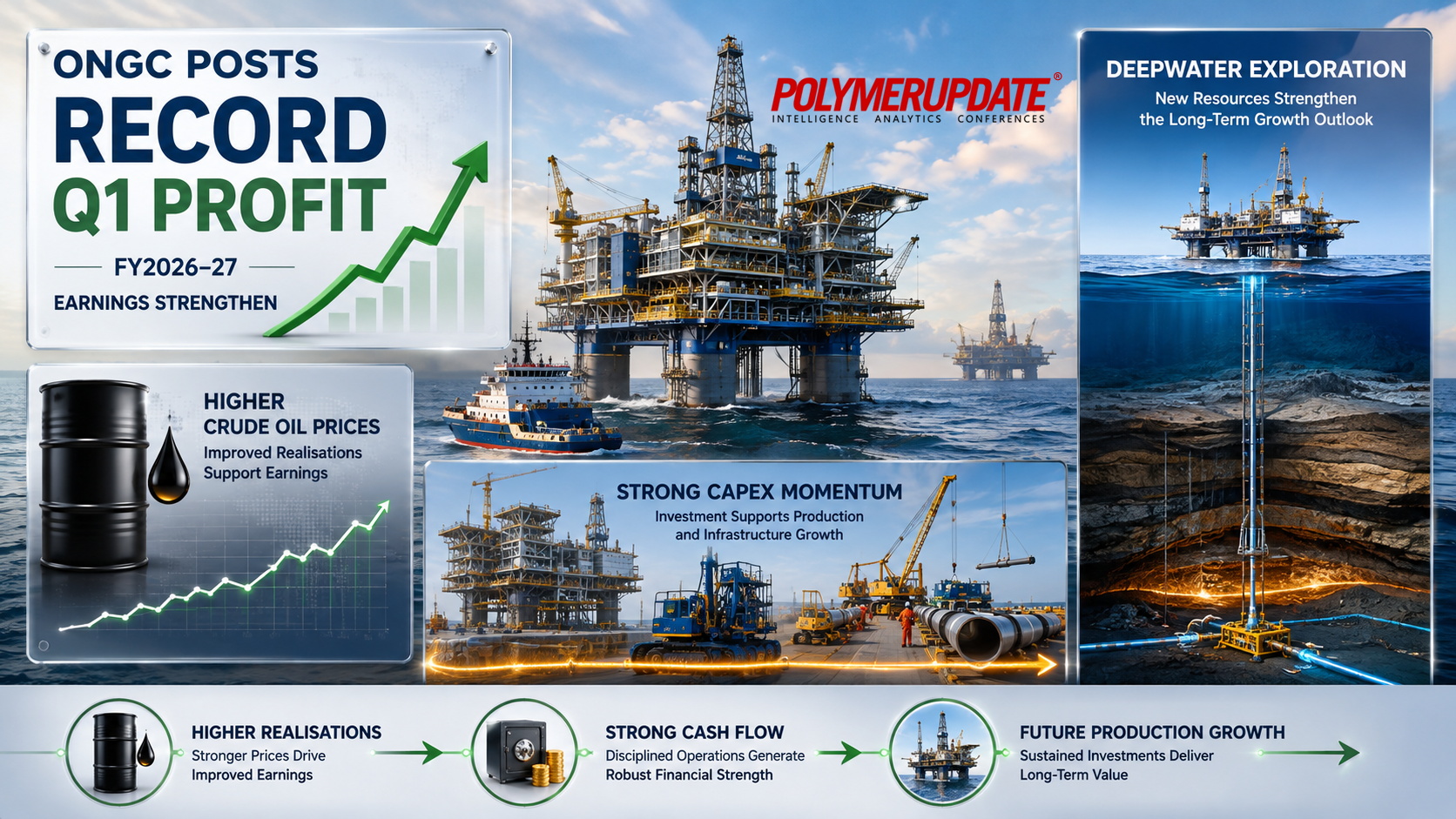 Growth drivers
ONGC's average net crude oil realisation from its nominated fields increased to US$99.45 a barrel during the quarter, representing a rise of more than 50 percent from US$66.13 a barrel recorded in the corresponding period of the previous fiscal year. In rupee terms, net crude realisation surged 66.5 percent to Rs 9,419 a barrel from Rs 5,658 a barrel a year earlier, aided by both stronger oil prices and exchange rate movements.
Similarly, crude oil produced from joint venture (JV) fields fetched an average realisation of US$103.34 a barrel, up 52.3 percent from US$67.87 a barrel in the year-ago quarter. In domestic currency, JV crude realisation increased 68.5 percent to Rs 9,787 a barrel compared with Rs 5,807 a barrel during the same period last year. The strong improvement in crude price realisations translated directly into higher revenues and profitability, highlighting ONGC's sensitivity to global oil price movements. As India's largest upstream oil and gas producer, the company derives a substantial portion of its earnings from crude oil production, making international price trends a key determinant of its financial performance.
Why up global pricesCrude oil prices remained exceptionally high during the April-June quarter of FY2026-27, driven by prolonged geopolitical tensions in West Asia. The conflict between the United States and Iran, coupled with the temporary closure of the Strait of Hormuz—a critical maritime chokepoint through which nearly a fifth of the world's crude oil trade passes—triggered widespread concerns over global supply disruptions. The heightened risk to energy shipments pushed international benchmark crude prices significantly higher compared with the corresponding period last year.
The sharp rise in global crude prices translated into substantially higher crude oil realisations for upstream producers such as ONGC. Elevated benchmark prices enabled the company to realise an average of US$ 99.45 a barrel from its nominated fields during the quarter, more than 50 percent higher than a year earlier. The improved price environment, supported by sustained supply concerns and tight market fundamentals, was the principal factor behind ONGC's robust growth in revenue and record quarterly profitability.
Aggressive capexDespite benefiting from higher oil prices, ONGC continued to maintain an aggressive capital expenditure programme aimed at reversing production declines and unlocking future growth. The company said a capital investment programme exceeding Rs 40,000 crore is currently underway in its western offshore assets, one of the country's most prolific hydrocarbon-producing regions. The investment is expected to support the development of new discoveries, enhance recovery from existing fields and strengthen long-term crude oil and natural gas production.
ONGC has been pursuing multiple redevelopment and enhanced oil recovery projects across its offshore fields as part of its broader strategy to improve domestic energy production and reduce India's dependence on imported crude. The company also highlighted progress under the government's "Samudra Manthan" offshore exploration initiative. During the quarter, ONGC spudded its first deepwater exploration well in the Mahanadi Basin, marking a significant milestone in India's efforts to expand offshore hydrocarbon exploration into frontier basins.
The commencement of deepwater drilling in the Mahanadi Basin is expected to provide valuable geological data and could potentially open new avenues for hydrocarbon discoveries along India's eastern offshore region. Deepwater exploration has assumed increasing strategic importance as conventional producing basins mature and the country seeks to enhance domestic oil and gas production. Another notable feature of the quarter was the growing contribution of natural gas from newly drilled wells. ONGC reported that gas production from new wells accounted for 38 percent of the total revenue generated from its nomination fields during the quarter, reflecting the company's sustained focus on expanding gas output alongside crude oil production.
Natural gas as a transition fuelThe increasing contribution from natural gas is significant as India continues to promote gas as a transition fuel in its energy mix. Higher gas production not only diversifies ONGC's revenue stream but also aligns with the government's objective of raising the share of natural gas in the country's primary energy basket. Industry analysts noted that ONGC's earnings underscore the strong operating leverage enjoyed by upstream producers during periods of elevated crude prices.
While higher oil prices directly improve realisations and profitability, sustained investment in exploration and field development remains essential to maintaining production levels over the longer term. The company's robust quarterly earnings also strengthen its financial position, providing greater flexibility to fund large-scale upstream investments while maintaining shareholder returns. ONGC has consistently balanced capital expenditure requirements with dividend payouts, supported by its strong cash generation capabilities.
Future outlookLooking ahead, ONGC's financial performance will continue to depend largely on international crude oil prices, production growth from its offshore projects and the success of ongoing exploration campaigns. The progress of its western offshore redevelopment programme, deepwater exploration activities and expansion of natural gas production are expected to remain key drivers of the company's long-term growth strategy.
With global energy markets continuing to be influenced by geopolitical developments and supply-demand dynamics, ONGC enters the remainder of FY2026-27 from a position of financial strength, backed by record quarterly profitability, strong cash flows and a sizeable investment pipeline aimed at enhancing India's domestic hydrocarbon production.
DILIP KUMAR JHA
Editor
dilip.jha@polymerupdate.com



