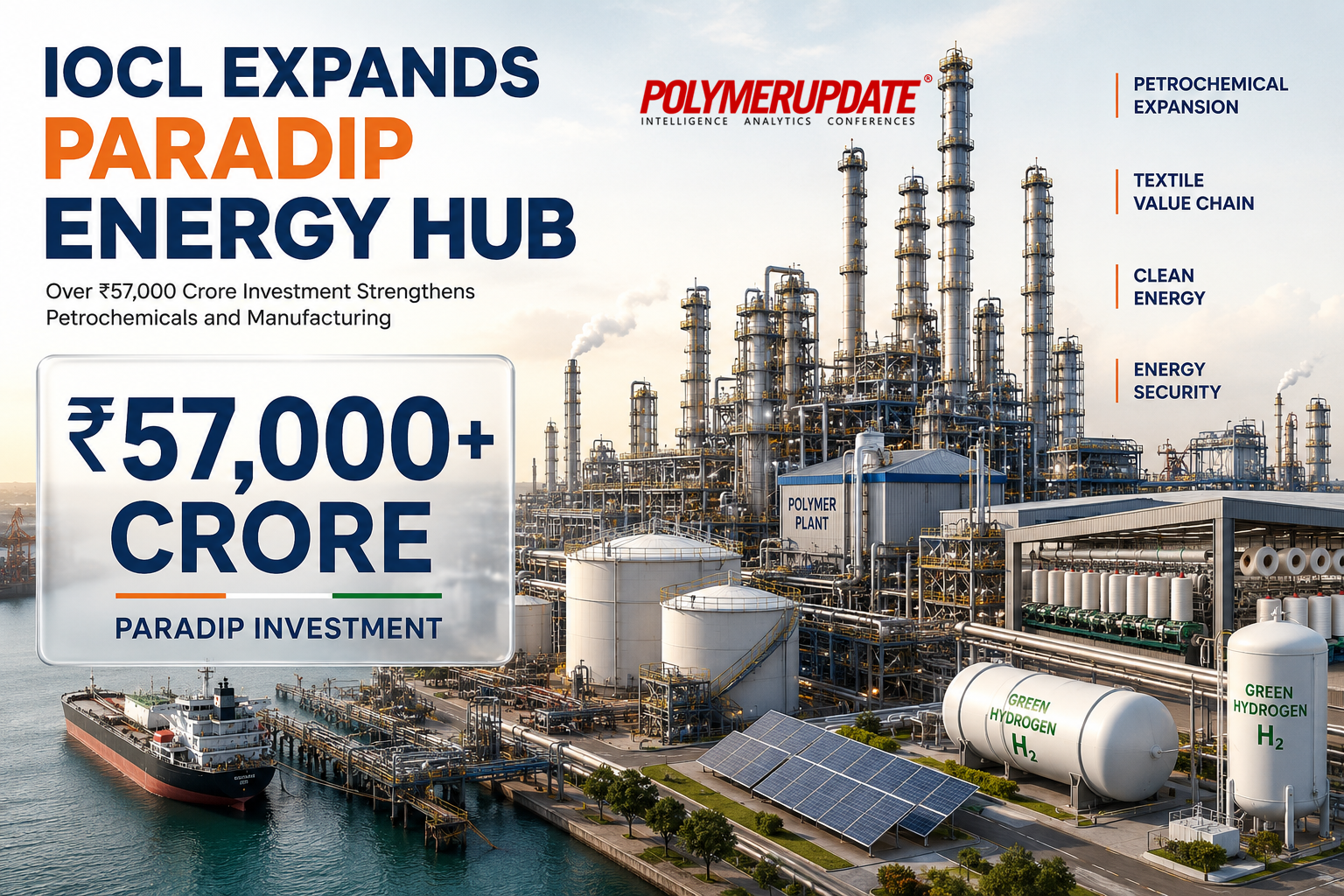
Indian Oil Corporation Ltd. (IOCL) has invested a cumulative Rs 43,359 crore in Odisha's Paradip to transform the coastal town into one of India's largest integrated energy and petrochemical hubs, while creating significant employment opportunities and strengthening the country's energy security. The state-owned energy major said its investments have not only expanded refining and petrochemical capacities but also laid the foundation for a robust downstream industrial ecosystem, positioning Paradip as a strategic manufacturing and export centre for petroleum and petrochemical products.
The investment portfolio includes Rs 34,555 crore in the world-class Paradip Refinery, Rs 3,150 crore in a polypropylene (PP) plant, and Rs 5,654 crore in a mono ethylene glycol (MEG) facility. Together, these projects have substantially enhanced the value addition of petroleum products and diversified the refinery's product basket into high-value petrochemicals.
 Additional investment
IOCL is also investing an additional Rs 13,805 crore in the ongoing paraxylene-purified terephthalic acid (PX-PTA) project, one of the company's most significant downstream petrochemical investments. The project is expected to strengthen India's polyester value chain by reducing dependence on imported PTA, a key raw material used in the manufacture of polyester fibres, films and packaging materials.
The 1.2 million tonnes per annum (MMTPA) PTA unit, which forms part of the integrated PX-PTA complex, is nearing completion and is expected to provide a major boost to India's rapidly expanding textile, packaging and polyester industries. Further expanding its footprint in Odisha, IOCL on Wednesday announced plans to invest Rs 4,382 crore in a textile park project at Bhadrak through a joint venture with MCPI Private Ltd. The proposed investment is expected to promote value-added textile manufacturing in the state by creating an integrated polyester and textile ecosystem linked with the upcoming PTA production at Paradip.
Clean energy capexIn another strategic move aligned with India's clean energy transition, the company also unveiled plans to invest Rs 1,064 crore in a hydroprocessed esters and fatty acids (HEFA)-based sustainable aviation fuel (SAF) project through a joint venture with M11 Energy Transition Pvt Ltd. The project aims to produce low-carbon aviation fuel and support India's decarbonisation goals in the aviation sector.
These investments underscore IOCL's long-term strategy of converting Paradip into a globally competitive integrated refining and petrochemical destination capable of serving both domestic and export markets. The Paradip Refinery has continued to achieve significant operational milestones. During the financial year 2025-26, the refinery recorded its highest-ever crude processing volume of 16.35 million metric tonnes, reflecting improved operational efficiency and higher capacity utilisation.
The refinery also commissioned a standby Sulphur Recovery Unit-III and a new Hydrogen Generation Unit, both of which are expected to improve operational reliability, enhance fuel quality and support the production of cleaner petroleum products in line with increasingly stringent environmental standards. Beyond industrial development, IOCL said the Paradip complex has emerged as a major source of employment and economic activity in the region.
Job creationThe refinery currently supports the livelihoods of more than 12,500 people, including skilled and unskilled workers, contractors, transport operators and supply chain partners. The company has also implemented several skill development and capacity-building initiatives to improve the employability of local youth and create sustainable livelihood opportunities in nearby communities.
The large-scale investments have generated substantial economic benefits for both the state and the Centre. During FY2025-26, the Paradip Refinery contributed more than Rs 30,392 crore to the state and central exchequers through various duties, taxes and levies, reinforcing its importance as one of Odisha's largest industrial taxpayers. Industry analysts believe the integrated refining and petrochemical complex is expected to attract significant downstream investments in plastic processing, polyester manufacturing, specialty chemicals, packaging materials and textiles, thereby multiplying employment opportunities and strengthening India's manufacturing ecosystem.
Focus on petrochemical productionThe expansion also aligns with the government's broader objective of enhancing domestic petrochemical production, reducing import dependence on key feedstocks and improving value addition within the country's refining sector. India's petrochemical demand has been growing steadily, driven by rising consumption across packaging, automobiles, construction, textiles, healthcare and consumer goods. Investments such as those at Paradip are expected to help bridge the supply-demand gap while supporting the government's vision of making India a global manufacturing hub.
Speaking on the occasion, Kausik Basu, Executive Director and Head of Paradip Refinery, said the facility represents industrial excellence, technological innovation and inclusive growth. "Paradip Refinery stands as a beacon of industrial excellence, innovation and inclusive growth. Indian Oil's continued investments at Paradip reaffirm its commitment to developing the region into a world-class integrated refinery and petrochemical hub that strengthens India's energy security and accelerates sustainable development," Basu said.
With continuing investments across refining, petrochemicals, textiles and sustainable aviation fuel, Paradip is steadily evolving into one of India's most important integrated industrial clusters, playing a pivotal role in supporting the country's energy needs, petrochemical self-reliance and long-term industrial growth.
DILIP KUMAR JHA
Editor
dilip.jha@polymerupdate.com



