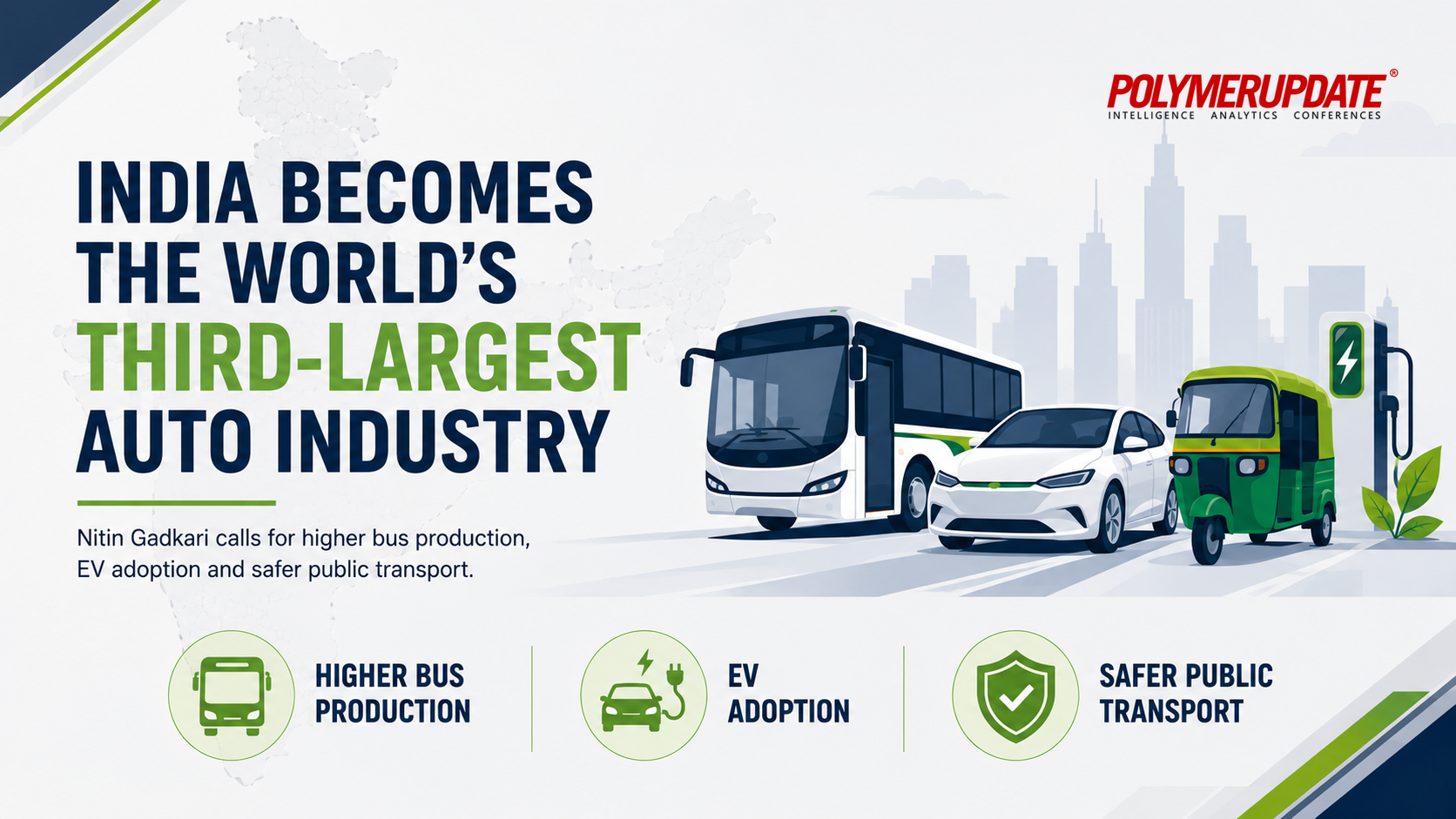
India has emerged as the world's third-largest automobile industry, surpassing Japan, marking a significant milestone in the country's industrial growth. However, despite this remarkable achievement, India must substantially expand its bus manufacturing capacity to meet the rising demand for efficient and sustainable public transportation, Union Minister for Road Transport and Highways Nitin Gadkari said while inaugurating Prawaas 5.0, India's largest public transport exhibition.
Addressing industry stakeholders, policymakers and transport experts at the event, Gadkari highlighted the remarkable transformation of India's automotive sector over the past decade. He noted that when he assumed office, the Indian automobile industry was valued at approximately ₹14 lakh crore and ranked seventh globally. Today, the industry has not only climbed to the third position worldwide but has also become one of the country's largest economic contributors.
 An economic growth pillar
The minister said the automobile sector now contributes nearly Rs 4.5 lakh crore in revenue to both the Centre and state governments while generating employment for around 4.5 crore people. The industry's rapid growth reflects India's expanding manufacturing capabilities, rising domestic demand and increasing global competitiveness, making it one of the key pillars of the nation's economic development.
While celebrating the sector's success, Gadkari stressed that public transport infrastructure must grow in tandem with the expanding economy. He pointed out that India currently requires nearly three lakh buses to adequately serve its growing urban and rural population. However, the domestic industry manufactures only about 70,000 to 80,000 buses annually, creating a substantial gap between supply and demand.
Need for a massive investmentAccording to the minister, bridging this gap will require significant investments in manufacturing capacity, technology and infrastructure. Expanding bus production is essential not only to improve mobility but also to reduce congestion, lower emissions and provide affordable transportation to millions of commuters. A stronger domestic bus manufacturing industry would also create additional employment opportunities and strengthen India's position as a global automotive manufacturing hub.
Electric mobility formed another major focus of Gadkari's address. He highlighted the rapid decline in lithium-ion battery costs, which has significantly improved the commercial viability of electric vehicles. Battery prices, he noted, have fallen sharply over recent years, making electric buses increasingly competitive with conventional diesel-powered vehicles.
Beyond lithium-ion technology, the minister said India is actively investing in next-generation battery chemistries, including aluminium-ion, zinc-ion and sodium-ion batteries. These emerging technologies are expected to improve energy security, reduce dependence on imported raw materials and lower overall battery costs, further accelerating the country's transition towards cleaner transportation.
Electric mobilityThe government's emphasis on electric mobility aligns with India's broader climate and energy objectives. The increasing adoption of electric buses is expected to reduce urban air pollution, lower fossil fuel consumption and contribute to the country's long-term decarbonisation goals. At the same time, advances in battery technology are likely to enhance vehicle performance, extend driving range and improve operational efficiency for fleet operators.
Passenger safety also featured prominently in Gadkari's address. Referring to recent bus fire incidents, he stressed the need for improved engineering standards, better vehicle design and stricter safety regulations across the public transport sector. As electric mobility expands rapidly, ensuring robust safety standards for batteries, electrical systems and vehicle components will remain a critical priority for manufacturers and regulators alike.
Safety protocolThe minister emphasised that technological advancement must always be accompanied by rigorous safety protocols to protect passengers and build public confidence in modern transport systems. He called upon manufacturers, technology developers and regulatory agencies to work together in enhancing vehicle safety through innovation and stricter quality standards.
In addition to manufacturing and safety, Gadkari highlighted the government's ongoing efforts to improve the ease of doing business in the automotive sector. He noted that vehicle approval timelines have been reduced significantly from 16 weeks to just six weeks, enabling manufacturers to introduce new products more quickly and improve overall industry efficiency.
Faster regulatory clearances are expected to encourage greater investment, support product innovation and strengthen India's competitiveness in both domestic and export markets. The streamlined approval process also reflects the government's broader commitment to creating a more business-friendly environment for the automotive industry.
ModernisationThe minister further outlined ambitious plans to modernise India's transport infrastructure. The government is developing five-star quality bus ports designed to provide world-class passenger amenities, with projects already underway at Tirupati and Katra. These modern transport hubs aim to transform the passenger travel experience by offering improved comfort, safety and operational efficiency.
Alongside bus terminals, the government continues to invest heavily in highways, tunnels and bridges to build a faster, safer and more integrated transport network. These infrastructure projects are expected to enhance connectivity, facilitate economic growth and improve logistics efficiency across the country. The announcements came during Prawaas 5.0, organised under the theme "Towards Safe, Smart & Sustainable Passenger Mobility."
The exhibition has brought together policymakers, state transport undertakings, vehicle manufacturers, technology providers, mobility startups and industry experts to showcase innovations in public transportation, electric mobility, fleet management, alternative fuels and intelligent transport systems. The event serves as an important platform for collaboration among stakeholders working to transform India's passenger mobility landscape. With rapid urbanisation, growing environmental concerns and increasing demand for efficient transportation, the exhibition highlights technologies and policy initiatives that are expected to shape the future of public transport in the country.
Resilience in manufacturing ecosystemIndia's emergence as the world's third-largest automobile industry reflects the strength and resilience of its manufacturing ecosystem. However, Gadkari's message underscored that sustaining this momentum will require equal emphasis on expanding public transport capacity, embracing clean technologies, improving passenger safety and investing in modern infrastructure. As India moves towards a more sustainable and efficient mobility ecosystem, strengthening the bus manufacturing sector is expected to play a pivotal role in meeting the country's evolving transportation needs while supporting economic growth and environmental sustainability.
DILIP KUMAR JHA
Editor
dilip.jha@polymerupdate.com



