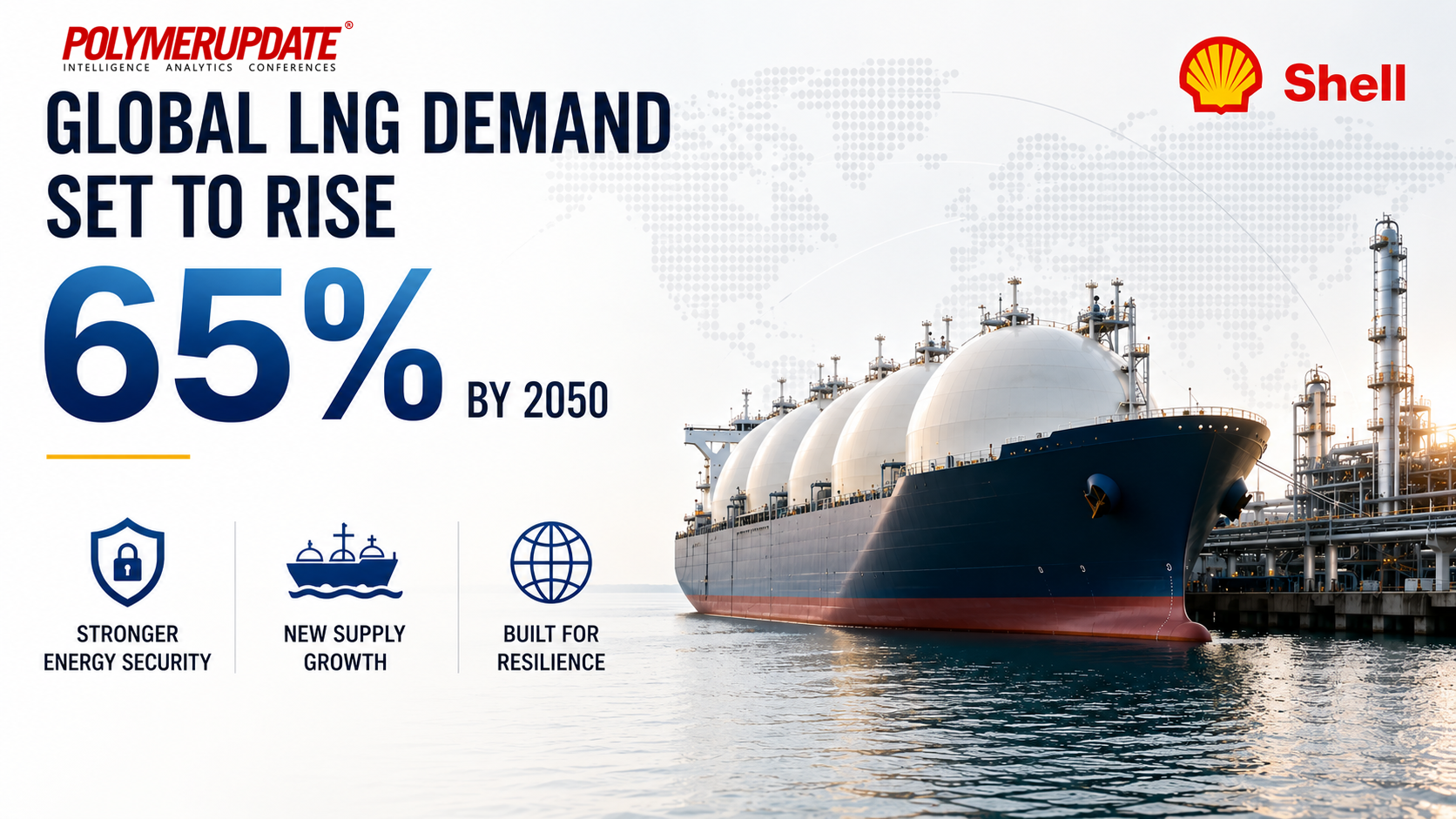
Global demand for liquefied natural gas (LNG) is expected to rise by around 65 percent from current levels to nearly 700 million tonnes annually by 2050, underscoring the fuel's growing role in ensuring energy security and supporting the global energy transition, according to Shell's LNG Outlook 2026. The report suggests that despite fresh geopolitical shocks in the Middle East, LNG is poised to remain a critical pillar of the world's energy mix as countries seek reliable and flexible fuel supplies while gradually reducing dependence on coal.
The outlook comes at a time when the global LNG market is facing one of its most significant stress tests since the energy crisis triggered by the Russia-Ukraine conflict. Escalating tensions in the Middle East and severe disruption to shipping through the Strait of Hormuz have temporarily shut in nearly one-fifth of the world's monthly LNG supply, pushing spot prices higher and exposing the vulnerability of global energy supply chains.
 Hormuz supply disruptions
Global LNG trade reached 422 million tonnes in 2025 and was widely expected to expand further this year. However, the geopolitical crisis has altered the near-term outlook, with supply disruptions affecting cargo movements from the Gulf region. The Strait of Hormuz, a strategic maritime chokepoint through which much of Qatar's LNG exports transit, has become the focal point of market concerns. Several Asian buyers have faced tighter supply conditions, forcing them to compete for available cargoes and driving spot LNG prices above US$20 per million British thermal units (MMBtu) during the peak of the crisis.
Despite these disruptions, the LNG market has demonstrated greater resilience than during previous energy shocks. Additional liquefaction capacity in North America, improved operational performance at existing export facilities and relatively slower LNG imports by some Asian countries have partially offset the loss of Middle Eastern supplies. Shell expects total global LNG trade in 2026 to remain broadly in line with last year's level, provided shipping through the Strait of Hormuz returns to normal during the summer, before growth resumes in 2027.
"The conflict created a system-wide shock with disruption cascading across all segments of the economy, but the LNG industry has proved resilient and able to adapt to changing market conditions. While additional investment in both supply and demand infrastructure remains essential, the long-term outlook for LNG continues to be robust, with the fuel expected to play a stabilising role in the global energy system," said Cederic Cremers, President of Integrated Gas at Shell.
New capacityThe report projects that around 180 million tonnes per annum of new LNG production capacity will enter the market by 2030. This wave of new supply, largely driven by projects in the United States, Canada and other producing regions, is expected to improve market availability, moderate prices and support the emergence of new LNG-consuming nations.
However, expanding supply alone will not be sufficient to meet the projected growth in demand. Importing countries will need to accelerate investments in regasification terminals, storage facilities and pipeline infrastructure to fully benefit from additional LNG availability. Infrastructure constraints remain one of the biggest challenges for many developing economies seeking to diversify their energy mix.
Demand metersSouth and Southeast Asia are expected to emerge as the primary engines of future LNG demand. Together, these regions are forecast to account for nearly 40 percent of global LNG imports by 2050 as rapid urbanisation, industrialisation and rising electricity consumption drive the need for cleaner-burning fuels. LNG is increasingly being viewed as a transition fuel capable of supporting economic growth while helping countries reduce carbon emissions compared with coal-fired power generation.
In advanced Asian economies such as Japan, new sources of electricity demand are also reshaping gas consumption patterns. The rapid expansion of artificial intelligence applications and hyper-scale data centres is creating additional demand for reliable power generation, reinforcing LNG's importance in balancing electricity grids increasingly dominated by intermittent renewable energy sources.
Beyond conventional power generation, LNG is also finding new applications in the transportation sector. Shell expects LNG bunkering demand to increase seven-fold to around 27 million tonnes by 2035, surpassing the total LNG imported by India last year. Growing environmental regulations in international shipping are encouraging vessel operators to adopt LNG as a cleaner marine fuel, further broadening the market's demand base.
Europe to drive growthEurope is also expected to remain an important LNG market over the coming decades. As domestic natural gas production continues to decline and renewable energy capacity expands, LNG will play a crucial role in ensuring energy security and balancing intermittent renewable power generation. The experience of recent years has highlighted the importance of diversified LNG imports in reducing dependence on single pipeline suppliers and strengthening the continent's energy resilience.
Meeting projected demand beyond 2030 will require another major wave of investment. Shell estimates that approximately 200 million tonnes per annum of additional LNG liquefaction capacity will need to be sanctioned during the 2030s and 2040s, beyond projects already under construction. Delays in approving new export facilities could tighten global supply and increase price volatility later in the decade.
While the Middle East conflict pushed Asian spot LNG prices above US$20 per MMBtu, market conditions remained considerably more stable than during 2022, when Russia's invasion of Ukraine sent global gas prices to record highs. The greater resilience reflects a more diversified global supply base and the widespread use of long-term contracts, which continue to account for roughly two-thirds of global LNG trade. As a result, the average price paid by buyers in May remained around US$11-12 per MMBtu, compared with US$7-11 per MMBtu before the latest geopolitical tensions emerged.
Shell’s 10th remarkable editionThe latest edition also marks the tenth anniversary of Shell's LNG Outlook, illustrating the remarkable transformation of the global LNG industry over the past decade. Since the report's inaugural publication in 2017, global LNG trade has expanded by nearly 60 percent, rising from 264 million tonnes to 422 million tonnes. China's LNG imports have increased by approximately 250 percent, the number of LNG-importing countries has grown from 36 to 49, and the global fleet of LNG-fuelled vessels has expanded dramatically from just 77 ships to more than 800.
As governments continue to pursue energy security alongside climate goals, Shell believes LNG will remain an indispensable component of the evolving global energy landscape. Although geopolitical tensions may periodically disrupt markets, the combination of expanding production, diversified supply sources and growing investment in infrastructure is expected to strengthen the industry's resilience and support sustained demand growth over the coming decades.
The Middle East crisis tests the resilienceThe recent escalation of tensions in the Middle East has emerged as a major test of the global liquefied natural gas (LNG) industry's resilience, highlighting the sector's vulnerability to geopolitical disruptions. The crisis has renewed concerns over the security of energy supply routes, particularly the Strait of Hormuz, through which a significant share of the world's LNG exports—primarily from Qatar, one of the world's largest LNG suppliers—passes. Although LNG shipments have largely continued without major interruptions so far, heightened military activity, increased shipping risks, and elevated insurance and freight costs have added fresh uncertainty to global gas markets.
Buyers across Europe and Asia remain on alert, closely monitoring developments amid fears that any prolonged disruption could tighten global LNG availability and trigger renewed price volatility. Despite these challenges, the LNG industry has so far demonstrated considerable resilience, supported by diversified supply sources, flexible trading mechanisms, and improved infrastructure developed following previous energy crises. Increased LNG production from the United States, Australia, and other exporting nations has helped cushion the market against potential supply shocks from the Gulf region.
Meanwhile, importers have strengthened energy security through higher storage levels, long-term supply contracts, and greater supplier diversification. Nevertheless, the crisis serves as a reminder that geopolitical risks remain a key determinant of global energy markets. A prolonged conflict or any disruption to shipping through critical maritime chokepoints could quickly strain LNG supply chains, raise procurement costs, and intensify competition for cargoes, particularly during periods of peak seasonal demand
DILIP KUMAR JHA
Editor
dilip.jha@polymerupdate.com



