In a landmark diplomatic breakthrough, the United States and Iran have signed a 14-point Memorandum of Understanding (MoU) aimed at extending the ceasefire between the two countries, ending months of military confrontation and paving the way for the reopening of the strategically important Strait of Hormuz. The agreement, signed by U.S. President Donald Trump and Iranian President Masoud Pezeshkian during the G7 summit in France, establishes a framework for a permanent peace settlement, sanctions relief, nuclear restrictions, and economic reconstruction in Iran.
The accord comes four months after hostilities involving the United States, Iran and Israel triggered one of the most severe geopolitical and energy crises in recent history. The Trump administration has described the agreement as "performance-based", under which Iran will receive economic and diplomatic benefits only if it fulfills its commitments, particularly regarding its nuclear programme.
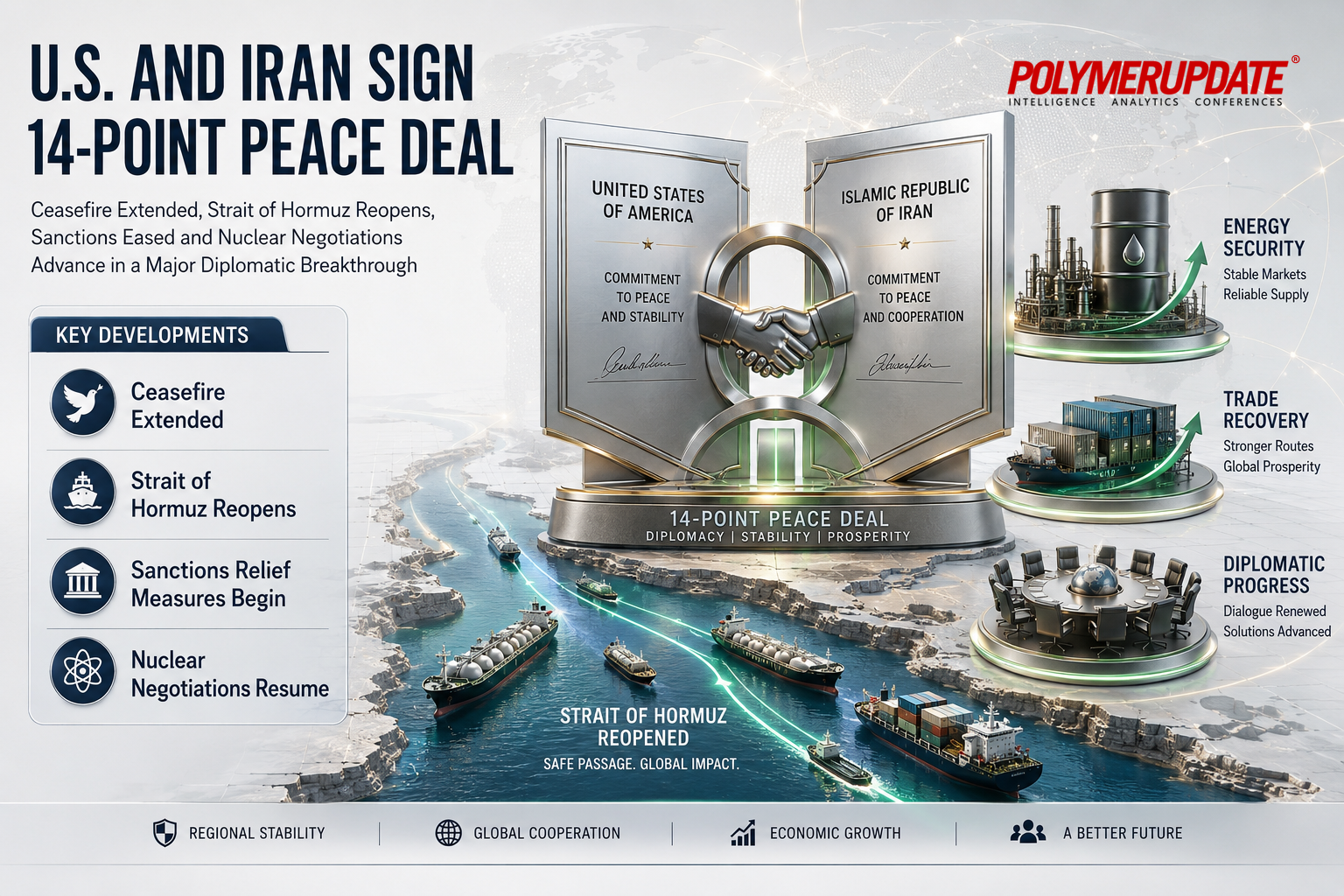 Permanent cessation of military operations
A key provision of the agreement calls for the immediate and permanent cessation of military operations on all fronts, including Lebanon. Both sides have pledged not to initiate military actions or threats against each other and to respect the sovereignty and territorial integrity of regional states. The inclusion of Lebanon reflects Tehran's long-standing demand that any ceasefire arrangement cover the broader regional conflict. However, uncertainty remains over how Israel will respond to provisions that effectively seek to halt military operations against Hezbollah.
The agreement also commits both nations to respecting each other's sovereignty and refraining from interference in domestic affairs. This marks a notable shift in U.S. policy, particularly after Washington had earlier voiced support for anti-government demonstrations inside Iran. Analysts believe this provision may face criticism from Iranian opposition groups who had expected stronger Western backing for political reforms.
Final settlement in 2-monthUnder the framework, Washington and Tehran have agreed to negotiate a comprehensive final settlement within 60 days, with the possibility of extending the deadline through mutual consent. The countdown toward a permanent agreement has already begun following the signing of the MoU, although several critical details remain unresolved and will require further negotiations.
One of the most significant energy-related provisions involves the gradual removal of the U.S. naval blockade and restrictions on Iranian ports. The blockade is expected to be fully lifted within 30 days, while the United States has also committed to reducing its military presence around Iran and returning to its pre-conflict deployment posture once a final agreement is concluded.
Hormuz reopeningThe agreement further mandates the reopening of the Strait of Hormuz, through which nearly one-fifth of global oil trade normally passes. Iran has agreed to facilitate the safe and free passage of commercial vessels, while both sides will work to clear military obstacles and undertake de-mining operations. Shipping traffic is expected to resume immediately in phases, offering relief to global energy markets that had been rattled by supply disruptions and soaring freight costs following the closure of the waterway.
Beyond security issues, the MoU outlines an ambitious economic roadmap for Iran's reconstruction. The United States and regional partners will formulate a development package worth at least $300 billion aimed at rebuilding infrastructure and supporting economic growth. While Washington will facilitate the necessary approvals and waivers, U.S. officials have emphasized that American taxpayers will not directly fund the initiative. Instead, investments are expected to come primarily from Gulf nations and private sector participants.
Ease on sanctionsThe agreement also sets the stage for the eventual removal of U.S. and international sanctions on Iran. Although no specific timeline has been established, both sides have agreed to begin discussions immediately on the sequencing of sanctions relief. The move could significantly improve Iran's access to international trade, banking services and energy markets after years of economic isolation.
At the heart of the agreement lies Iran's commitment never to acquire nuclear weapons. Tehran has agreed not to procure or develop a nuclear arsenal and to address its existing stockpile of enriched uranium under international supervision. The material is expected to be downblended or otherwise managed through mechanisms to be negotiated in the coming weeks, with oversight from the International Atomic Energy Agency (IAEA). U.S. officials have described this commitment as one of the agreement's most important achievements.
Status quo on Iran’s nuclear programmePending a final settlement, both countries have agreed to maintain the current status of Iran's nuclear programme. The United States will refrain from imposing new sanctions and will issue waivers permitting oil exports, banking transactions and transportation services to continue during the negotiation period. This interim arrangement is expected to support a gradual normalization of Iran's energy exports and economic activity.
Another major breakthrough concerns Iran's frozen overseas assets. The United States has agreed in principle to make available restricted Iranian funds, with phased releases tied to Tehran's compliance with the agreement. The issue had been one of the most contentious aspects of negotiations and is widely viewed as critical to Iran's economic recovery.
Compliance for futureThe final provisions establish mechanisms for monitoring implementation of the MoU and ensuring compliance with any future agreement. Once negotiations are completed, the comprehensive settlement is expected to be endorsed through a binding United Nations Security Council resolution, providing an international legal framework for the accord.
While significant challenges remain and many operational details are yet to be finalized, the agreement marks the most consequential diplomatic breakthrough between Washington and Tehran in decades. For global energy markets, the reopening of the Strait of Hormuz and the eventual return of Iranian exports could help ease supply concerns. For the region, the deal offers a rare opportunity to transition from conflict toward a more stable political and economic environment.
DILIP KUMAR JHA
Editor
dilip.jha@polymerupdate.com



