China’s economic recovery showed renewed signs of weakness in April as industrial production, retail sales and investment growth slowed sharply amid rising geopolitical tensions and growing concerns over the economic fallout from the Iran conflict. The latest data reflected increasing pressure on the world’s second-largest economy, with weak domestic demand and external uncertainties continuing to weigh heavily on growth momentum. Sluggish consumer spending, softer factory activity and cautious private-sector investment underscored the fragile nature of China’s post-pandemic recovery.
Chinese policymakers warned that the global economic environment had become increasingly “severe” and uncertain as escalating geopolitical conflicts, volatile energy prices and slowing global trade intensified downside risks. The conflict in Iran has added fresh concerns for China, the world’s largest crude oil importer, as higher energy costs and disruptions linked to the Strait of Hormuz threaten to further pressure manufacturing activity and consumer confidence. Analysts believe persistent external shocks and subdued domestic demand could prompt Beijing to introduce additional policy support measures in the coming months to stabilise growth.
 Slowing industrial production
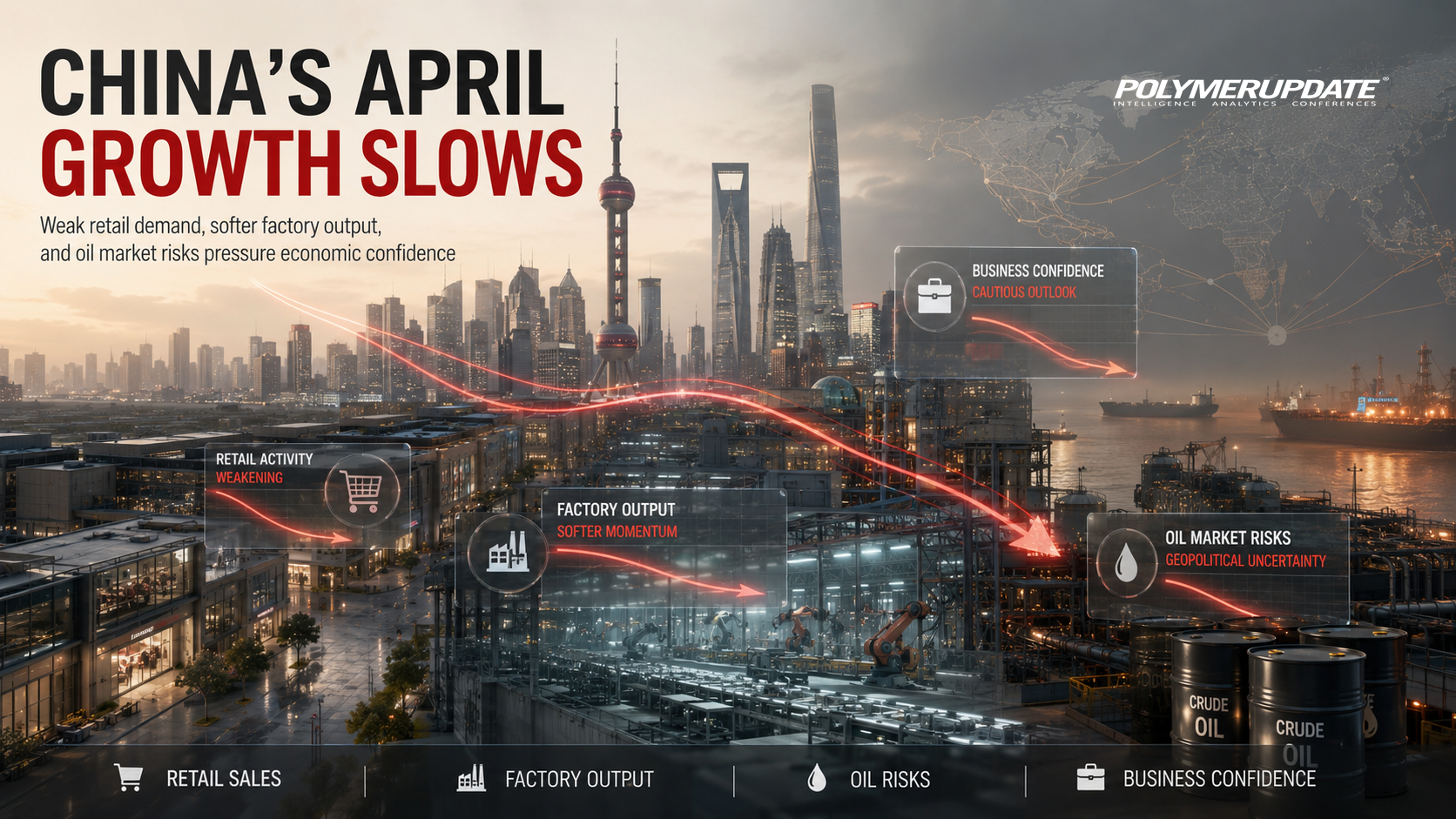
Official data released on Monday showed that China’s industrial production rose 4.1 percent year-on-year in April, falling well short of market expectations for a 6 percent increase and slowing from the 5.7 percent growth recorded in March. The weaker-than-expected performance highlighted the fragile state of China’s manufacturing sector as factories faced softer external demand, declining export orders and persistent uncertainty across global markets. The slowdown also reflected broader caution among businesses amid rising geopolitical tensions and concerns over the global economic outlook.
Manufacturing activity has additionally come under pressure from elevated energy prices linked to the escalating conflict in Iran and continued disruptions surrounding the Strait of Hormuz. Higher crude oil prices have increased input and transportation costs for Chinese industries, squeezing profit margins and weighing on production activity. Analysts believe prolonged geopolitical instability and slowing global trade could continue to dampen industrial momentum in the coming months, increasing pressure on Beijing to introduce further stimulus measures to support economic growth and business confidence.
Retails sales disappointRetail sales, a key indicator of consumer spending in China, also weakened sharply in April, underscoring persistent fragility in domestic demand. Official data showed retail sales rose just 0.2 percent year-on-year, significantly below analyst expectations of a 2 percent increase and much slower than the 1.7 percent growth recorded in March. The disappointing figures highlighted continued caution among Chinese consumers as concerns over employment, income growth and the broader economic outlook weighed on household spending patterns.
The April reading marked the weakest pace of retail sales growth since December 2022, when China was emerging from its strict Covid-19 restrictions and widespread infections disrupted economic activity across the country. Analysts noted that subdued consumer confidence, ongoing weakness in the property sector and rising geopolitical uncertainties have continued to restrain discretionary spending. The slowdown in retail activity has added to concerns that weak domestic consumption could remain a major challenge for Beijing’s efforts to stabilise economic growth amid increasing external pressures and global market volatility.
The war impactThe gloomy economic picture offered one of the clearest early indications that the conflict in Iran was beginning to impact China’s economy. Beijing has attempted to cushion the domestic impact of surging global crude oil prices through regulatory interventions and fuel pricing controls, but higher energy costs are increasingly filtering through to industrial activity and consumer sentiment.
China, the world’s largest crude oil importer, remains heavily dependent on energy supplies from the Middle East. The escalating tensions surrounding Iran and disruptions linked to the Strait of Hormuz have heightened concerns over supply security and transportation costs, contributing to increased uncertainty across global markets. Rising oil prices have added pressure on Chinese manufacturers already facing weaker overseas demand and tighter profit margins. Higher input costs, particularly for transportation, chemicals and heavy industries, are beginning to squeeze industrial production and reduce business confidence.
Economists believe the deteriorating global backdrop could further complicate Beijing’s efforts to stabilise growth this year. Chinese policymakers have repeatedly acknowledged the growing challenges from external shocks, including geopolitical tensions, supply chain disruptions and slowing global trade. The conflict in West Asia has also amplified fears of broader inflationary pressures, although China’s domestic demand weakness has so far limited any major spike in consumer prices. Authorities have continued to rely on administrative measures to contain fuel price volatility and protect consumers from sharp increases in energy costs.
However, analysts caution that prolonged geopolitical instability could make it increasingly difficult for Beijing to shield the economy from imported inflation. Sustained disruptions to oil flows through critical shipping routes could push global energy prices even higher, increasing production costs and further weakening consumer purchasing power.
Disappointing sectorsThe latest economic indicators underscored the fragile nature of China’s domestic recovery, with consumer confidence remaining weak despite a series of policy support measures introduced over the past year. Authorities have rolled out targeted stimulus initiatives, monetary easing steps and consumption support programmes to revive economic activity, but household spending has continued to remain subdued. Concerns over slower income growth, uncertain employment prospects and persistent weakness in the property sector have encouraged consumers to adopt a more cautious approach toward discretionary spending.
China’s car sales fell 15 percent, the biggest decline since mid-2022 when Beijing was under Covid restrictions. Though the world’s second-biggest economy tried to limit the domestic impact of higher oil prices through regulatory measures and short-term price controls. But the data pointed to stress in the energy and industrial system. For example, China’s daily crude oil output was around 598,000 tonnes in April, with total production up 1.2 percent year-on-year but down 5.9 percent from March. Refining activity slowed with the volume of crude oil processed falling 11.4 percent from the previous month and 5.8 percent from a year ago.
The property sector is another drag. Property investment fell 14 percent in January-April, construction starts fell 22 percent and home sales by value fell 15 percent. The prolonged property downturn continues to affect construction activity, local government revenues and household wealth, creating additional pressure on policymakers attempting to stabilise economic growth amid rising external and geopolitical risks.
Fixed-asset investment also softened during the period, further signalling broader weakness across the economy and highlighting the limited effectiveness of existing stimulus measures. Analysts noted that sluggish private-sector investment, declining business confidence and ongoing stress in the real estate market remained key drags on overall growth momentum.
The disappointing April data is likely to intensify calls for additional policy support from Chinese authorities. Market participants expect Beijing to introduce further fiscal stimulus and monetary easing measures in the coming months to stabilise growth and restore confidence. The People’s Bank of China has already implemented several supportive measures over recent quarters, including cuts to reserve requirement ratios and targeted lending support for key sectors. However, economists argue that policy transmission remains weak as businesses and households remain cautious about borrowing and spending.
Resilient exportsChina’s exports surged 14.1 percent year-on-year in U.S. dollar terms in April 2026, reaching a record high of US$ 359.44 billion and significantly surpassing market expectations despite rising global trade uncertainties. The strong export performance was largely driven by robust demand for high-tech manufacturing goods, green energy products and artificial intelligence-related equipment. Exports to the United States also rebounded sharply, rising 11.3 percent to US$ 36.8 billion even as punitive tariffs and trade tensions continued to pose challenges for Chinese exporters. The data highlighted the resilience of China’s manufacturing sector and its growing dominance in advanced technology supply chains.
High-value technology exports remained the key growth engine during the month. Year-on-year exports of integrated circuits nearly doubled, while shipments of automatic data processing equipment jumped 47 percent and vehicle exports surged 74 percent. Analysts noted that the sharp rise in exports was also supported by a global rush to stockpile goods, as international buyers accelerated purchases amid geopolitical uncertainties stemming from the Iran war and ongoing disruptions around the Strait of Hormuz. Concerns over supply chain disruptions, shipping delays and rising freight costs encouraged overseas importers to secure inventories in advance, temporarily boosting export orders and manufacturing activity across several sectors.
DILIP KUMAR JHA
Editor
dilip.jha@polymerupdate.com



