
Click the icon to add a specified price to your Dashboard list. This makes it easy to keep track on the prices that matter most to you.

Vipul Group of Companies began its journey in 1968 with its naphthol, fast colour bases, and dye intermediates business under the stewardship of Pravinchandra B. Shah. The group subsequently expanded at a rapid pace by setting up a manufacturing facility in Thane, on the outskirts of Mumbai. Its growth trajectory continued steadily, with the formal establishment of Vipul Dye Chem in 1972, which was later renamed Vipul Organics Ltd (VOL) in 2017 to better reflect its evolving product portfolio. Today, as VOL celebrates its Golden Jubilee in the colour industry, it has emerged as a name to reckon with, says Mihir V. Shah, Executive Director, Vipul Organics Ltd, in an interview withDilip Kumar Jha, Editor at Polymerupdate. Edited excerpts:
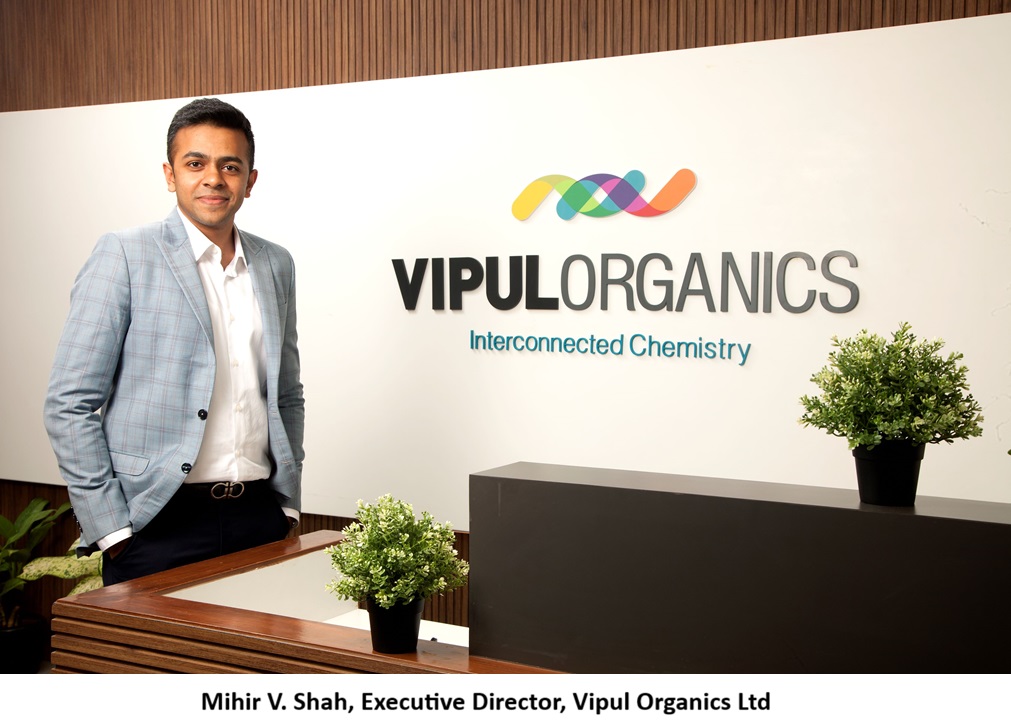
How will the zero import duty on chemicals and petrochemicals till June 2026 affect Vipul’s sales and margins?
The reduction of import duty to zero is expected to positively impact our business overall. While it may increase competition in certain segments, it will significantly boost the polymer industry, as raw material costs are likely to reduce and demand is expected to rise. For Vipul Organics, this presents a clear opportunity. A growing polymer market will directly drive higher consumption of pigments used in plastic and polymer applications. We are well positioned to capitalise on this increased demand and expand our pigment sales in the polymer segment.
What global trends are shaping the chemicals industry and their impact on India?
The global chemicals industry is witnessing a major supply-chain shift (China+1), benefiting countries like India. This is creating strong opportunities for Indian players to become reliable global suppliers. At the same time, raw material price volatility remains a key challenge impacting margins.
Vipul’s backward and forward integration helps us manage this volatility effectively. It also enables a more agile and resilient supply chain, ensuring timely deliveries. Globally, there is an increasing focus on cost efficiency and scale, and in line with this we are expanding our production capacities. This will help us reduce per-unit cost and improve competitiveness. Overall, these trends position us well to drive growth while maintaining profitability.
What is the company’s 4–5-year growth roadmap and execution strategy?
Vipul Organics aims to deliver a sustained CAGR of around 20 percent over the next 4–5 years. Our growth will be driven by a strong focus on high-performance and high-margin products, and we are strategically moving up the value chain to enhance profitability. Our resilient and integrated supply chain will continue to be a key enabler. With increasing scale, we will benefit from economies of scale and improved cost efficiency. We are also expanding capacities to support future demand growth, with a strong emphasis on operational excellence and margin expansion. Through Adimem technology in water treatment, we are reducing water consumption significantly, which also strengthens our commitment to sustainable and responsible manufacturing. Overall, our strategy balances growth, profitability, and sustainability in a dynamic market.
How can Vipul ensure stability and investor confidence amid price volatility?
During periods of price volatility, our focus remains on consistency, resilience, and transparency. With a strong legacy of over 50 years, we have demonstrated stability across cycles. We continue to expand our global footprint from 45 to over 56 countries, reflecting growing customer trust. Our business is supported by a diversified yet loyal customer base with repeat orders. We are witnessing consistent year-on-year growth from existing customers, indicating preferred-supplier status. This strengthens revenue visibility and reduces dependency on spot markets. Our integrated operations help us manage cost fluctuations effectively. Together, these factors reinforce investor confidence and long-term business stability.
How can sustainability and green chemistry help Vipul Organics differentiate itself?
Sustainability and green chemistry are becoming key differentiators in the specialty chemicals industry. At Vipul Organics, we do not just talk about sustainability—we actively implement it in our operations. While many companies see sustainability as an added cost, we view it as a value creator. Our Adimem initiative is a prime example of this approach. It focuses on water treatment and reuse, reducing overall resource consumption. This not only improves our environmental footprint but also enhances operational efficiency. Importantly, Adimem is also generating revenue by supplying solutions to other companies, creating a dual advantage of cost savings and new business opportunities. Our focus on green chemistry strengthens our brand positioning with global customers and enables us to achieve long-term competitiveness and responsible growth.
Should Vipul Organics pursue forward integration into polymers, and what R&D is needed to lead innovation?
Forward integration into polymer-based applications is a strategic opportunity to capture higher value in the supply chain. At Vipul Organics, we have already taken steps by investing in a dedicated application lab for polymer testing. This enables us to work closely with customers and offer application-driven solutions. Our approach remains strongly customer-centric, aligning products with end-use requirements. With a multi-fork and resilient supply chain, we are well positioned to manage market volatility. Our R&D team, with decades of experience, is a key strength in driving innovation. We are actively developing pigments for advanced applications such as latex systems, and expanding our work in VAT dyes and other specialty segments. Focused investments in application development and specialty chemistries will enhance differentiation and position us as a solution provider and innovation-led player in the specialty chemicals space.
What is your strategy for export diversification amid geopolitical and tariff risks?
Export market diversification is a key pillar of our growth strategy. We have expanded our presence from 45 to over 57 countries, reducing geographic concentration risk. This wider footprint helps us mitigate geopolitical and tariff-related uncertainties. We are actively entering non-traditional and emerging markets to unlock new growth avenues. In the last fiscal year, we witnessed strong growth in orders from new customers, while continuing to deepen relationships in existing markets. Our strategy focuses on offering a basket of products as a one-stop solution, which enhances customer stickiness and increases share of business. Diversification across regions and customers ensures more stable and predictable revenues and strengthens our resilience while supporting sustainable export growth.
Are geopolitical tensions causing chemical supply shortages in India?
Indian downstream industries are currently facing intermittent supply disruptions, rather than a complete shortage. Geopolitical uncertainties have impacted the availability of key raw materials and intermediates, leading to price volatility and occasional supply delays. Certain sectors like polymers and petrochemicals are more sensitive to these disruptions. However, proactive government measures have helped ease some import constraints, and companies are increasingly focusing on diversifying their sourcing strategies. There is also a clear shift towards higher inventory planning and stronger risk-management practices. Integrated players are better positioned to manage supply-chain uncertainties. Over the long term, this environment is driving capacity expansion and greater self-reliance in India. Overall, the challenge is temporary and is ultimately strengthening the resilience of the industry.
DILIP KUMAR JHA
Editor
dilip.jha@polymerupdate.com


