The Israel–US war with Iran has triggered oil shocks, with drones and missiles directly hitting energy infrastructure and allied services, causing irreparable losses globally. Some of the energy facilities damaged in this war have been permanently destroyed, while others may take years, if not decades, to return to their pre-war status. Experts believe that the scale of damage caused by drone and missile attacks, along with aggressive retaliation, has set the Gulf countries back by several years; full restoration could take at least a decade, if not longer.
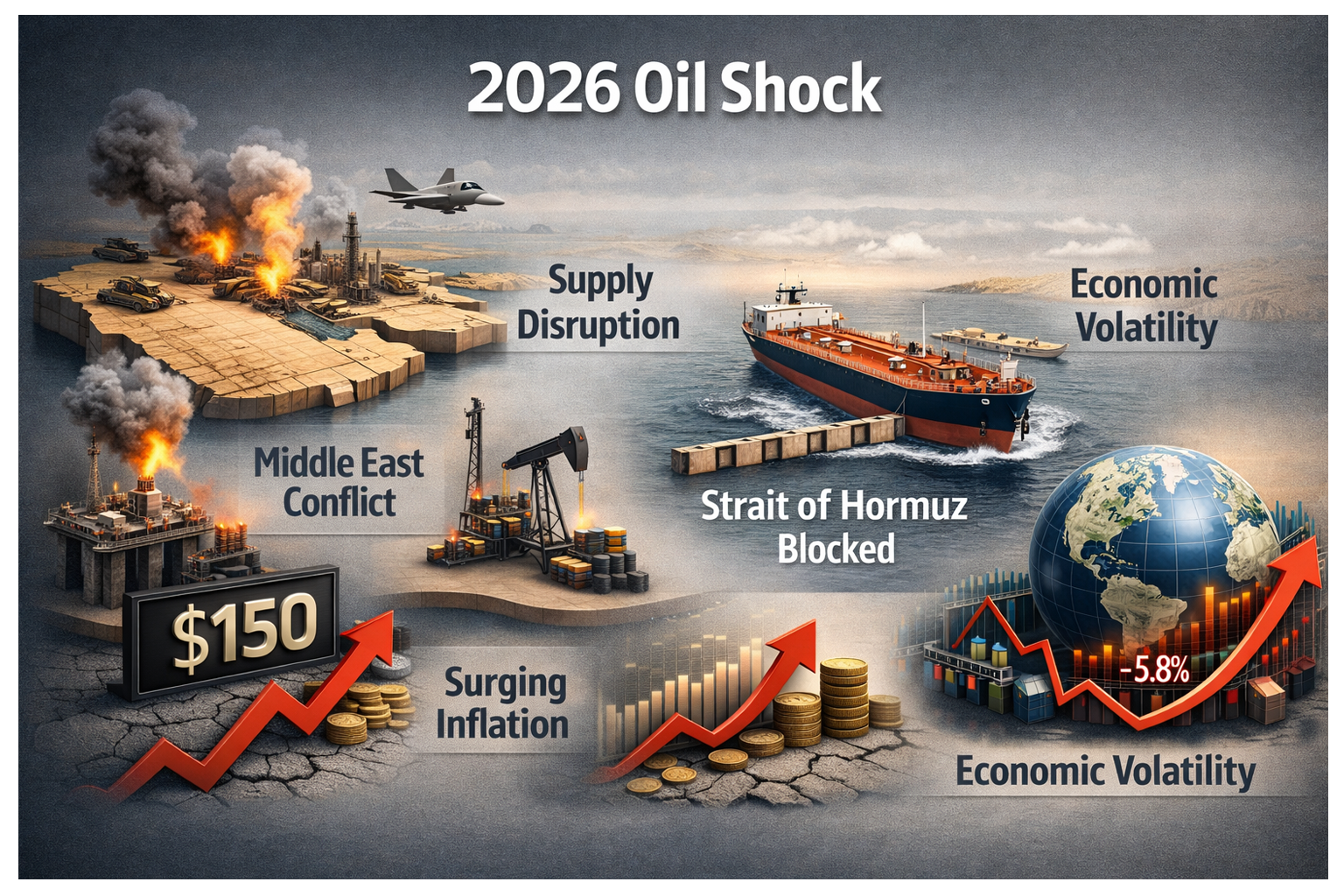
In addition to the destruction of oilfields, refineries, and tanker-loading facilities in Iran due to joint Israel–US military strikes, Iranian retaliation on energy infrastructure in Gulf countries has reduced the region’s crude oil production by at least 11 million barrels per day, along with a significant loss in natural gas output. Iran’s near closure of the Strait of Hormuz—a critical supply route handling around 20 percent of global seaborne oil trade—has disrupted nearly 20 million barrels per day of crude oil transit from the Middle East to Asia.
Fatih Birol, Executive Director of the International Energy Agency (IEA), has warned that the Middle East conflict—particularly the war involving Iran and the disruption of the Strait of Hormuz—has triggered an energy crisis worse than the oil shocks of the 1970s. The blockage of this crucial waterway, responsible for around 20 percent of global oil and gas flows, has halted most shipments, posing a “major threat” to the global economy. More than 40 energy assets, including refineries and pipelines across nine countries, have been severely damaged, creating long-term supply challenges.
Historical comparisonThe current episode closely mirrors past oil shocks, but with amplified risks. During the 1973 OPEC embargo, oil prices quadrupled, triggering global inflation and recession. The shock came at a time when the global economy was already fragile, amplifying its impact. In 1979, the Iranian Revolution led to oil prices doubling within a year, driven by supply uncertainty. Inflation surged globally, forcing aggressive monetary tightening.
This was followed by the 1990 Gulf War, which saw a sharp but short-lived spike driven by supply disruptions. Markets stabilized relatively quickly as supply chains normalized. Then came the Lehman Brothers crisis in 2008, during which oil prices surged to US$147 a barrel, driven largely by demand and financial flows rather than structural supply disruptions—making it fundamentally different from today.
However, the current 2026 oil shock appears more dangerous. The structural backdrop today is significantly weaker, marked by record-high global debt levels, fragile post-pandemic supply chains, tightly balanced energy markets with limited spare capacity, and heightened currency volatility across emerging markets. Additionally, the current energy shock is multi-dimensional—simultaneously impacting oil, gas, LNG, fertilizers, and freight.
Supply disruptionThe war in the region, which began on 28 February, has impeded energy trade flows through the Strait, creating the largest supply disruption in the history of the global oil market. Global supply of liquefied natural gas (LNG) has also been reduced by around 20 percent due to the situation.
Global oil supply is projected to plunge by 8 million bpd in March, with curtailments in the Middle East partly offset by higher output from non-OPEC+ (Organisation of the Petroleum Exporting Countries and its allies) producers, as well as Kazakhstan and Russia, following disruptions at the start of the year. While the extent of losses will depend on the duration of the conflict and the severity of disruptions to flows, the IEA estimates global oil supply to rise by an average of 1.1 million bpd in 2026, with non-OPEC+ producers accounting for the entire increase.
The conflict is also having a significant impact on global product markets, with export flows through the Strait at a near standstill. Gulf producers exported 3.3 million bpd of refined products and 1.5 million bpd of liquefied petroleum gas (LPG) in 2025. More than 3 million bpd of refining capacity in the region has already shut down due to attacks and a lack of viable export outlets. Refinery runs elsewhere are likely to be increasingly constrained due to limited feedstock availability.
Price riseOil and natural gas prices have increased significantly since the war began. Brent crude futures are up by around 55 percent since the start of hostilities on 28 February, while West Texas Intermediate (WTI) Cushing futures have risen by 47 percent. Dutch TTF, the European benchmark for natural gas, is about 70 percent higher. Some oil product markets have also been particularly affected, including diesel and jet fuel, whose benchmark prices have more than doubled in Asia.
Crude and oil product flows through the Strait of Hormuz have plunged from around 20 million bpd before the war to a mere trickle currently. With traffic largely halted, limited capacity to bypass this crucial waterway, and storage facilities filling up, Gulf countries have cut total oil production by more than 11 million bpd. In the absence of a rapid resumption of shipping flows, supply losses are set to increase.
Stock and releaseOil-consuming countries hold significant volumes of oil in storage to help bridge temporary supply disruptions. Global observed inventories of crude and refined products are currently estimated at more than 8.2 billion barrels, the highest level since February 2021. Roughly half of these are held in advanced economies, of which 1.25 billion barrels are maintained by governments for emergency purposes, with a further 600 million barrels of industry stocks held under government obligations. On March 11, IEA members pledged to release 411 million barrels from their strategic reserves in a coordinated effort.
Individual implementation plans have been submitted to the IEA by member countries. These plans indicate that stocks from IEA member countries in Asia Oceania will be made available immediately, while stocks from member countries in the Americas and Europe will be released starting from the end of March. This coordinated stock release marks the sixth in the IEA’s history. Previous collective actions were undertaken in 1991, 2005, 2011, and twice in 2022.
ConclusionThe current oil shock is evolving beyond a commodity event into a full-scale macroeconomic disruption. If supply constraints persist, markets could transition into a prolonged phase of high inflation, weaker growth, and heightened volatility.
Every major oil shock in the past 50 years has reshaped the global economy—2026 may be no different, but potentially far more intense. Oil shocks do not merely move prices; they redefine economic cycles, policy responses, and global power structures.
DILIP KUMAR JHA
Editor
dilip.jha@polymerupdate.com



