
Click the icon to add a specified price to your Dashboard list. This makes it easy to keep track on the prices that matter most to you.

India has unveiled a framework for finalising an interim trade agreement aimed at incorporating tariff reductions, lowering trade frictions, and reviving momentum toward a final Bilateral Trade Agreement (BTA). Under the pact, the United States will cut import tariffs on Indian goods to 18 percent from 50 percent (comprising a 25 percent reciprocal tariff and an additional 25 percent penal tariff imposed over Russian oil purchases), in response to India’s decision to either eliminate existing tariffs or reduce them sharply.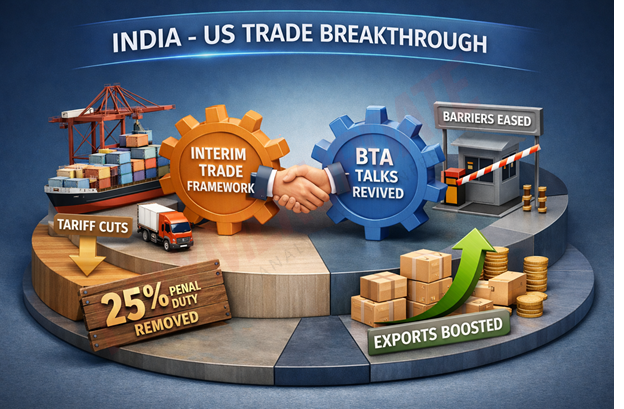 Both India and the United States issued separate joint statements, which read: “Today’s framework reaffirms the countries’ commitment to the broader U.S.–India Bilateral Trade Agreement (BTA) negotiations, launched by President Donald J. Trump and Prime Minister Narendra Modi on February 13, 2025, which will include additional market access commitments and support more resilient supply chains. The Interim Agreement between the United States and India will represent a historic milestone in our countries’ partnership, demonstrating a common commitment to reciprocal and balanced trade based on mutual interests and concrete outcomes.”
Sectoral tariff reductions
India will eliminate or reduce tariffs on all U.S. industrial goods and a wide range of U.S. food and agricultural products, including dried distillers’ grains (DDGs), red sorghum for animal feed, tree nuts, fresh and processed fruit, soybean oil, wine and spirits, and other products.
The United States will apply a reciprocal tariff rate of 18 percent on originating Indian goods, including textiles and apparel, leather and footwear, plastics and rubber, organic chemicals, home décor, artisanal products, and certain machinery, subject to the successful conclusion of the Interim Agreement. The applicable tariff will also cover generic pharmaceuticals, gems and diamonds, and aircraft parts.
The United States will additionally remove tariffs on certain Indian aircraft and aircraft parts imposed earlier on national security grounds. Similarly, consistent with U.S. national security requirements, India will receive a preferential tariff-rate quota for automotive parts subject to earlier-imposed tariffs. Contingent on the findings of the U.S. investigation into pharmaceuticals and pharmaceutical ingredients, India will receive negotiated outcomes with respect to generic pharmaceuticals and ingredients. The United States and India have committed to providing each other preferential market access in sectors of mutual interest on a sustained basis.
Rules of origin
Both the United States and India propose to establish rules of origin to ensure that the benefits of the Agreement accrue predominantly to the United States and India. Both countries will also address non-tariff barriers affecting bilateral trade. India has agreed to address long-standing barriers to trade in U.S. medical devices; eliminate restrictive import licensing procedures that delay market access for, or impose quantitative restrictions on, U.S. Information and Communication Technology (ICT) goods; and undertake a determination, with a view to achieving a positive outcome.
New Delhi has also committed to working on these issues within six months of the Agreement’s entry into force, including determining whether U.S.-developed or international standards—such as testing requirements—are acceptable for U.S. exports entering the Indian market in identified sectors. Recognising the importance of collaboration in resolving long-standing concerns, India has further agreed to address persistent non-tariff barriers affecting trade in U.S. food and agricultural products.
To enhance ease of compliance with applicable technical regulations, the United States and India intend to discuss their respective standards and conformity assessment procedures in mutually agreed sectors. In the event of any changes to the agreed tariffs by either country, both sides have agreed that the other may modify its commitments accordingly.
Market access expansion
Furthermore, both countries will work towards further expanding market access opportunities through negotiations under the BTA. The United States has affirmed that it intends to take into consideration, during the BTA negotiations, India’s request that it continue efforts to lower tariffs on Indian goods. The United States and India have also agreed to strengthen economic security alignment to enhance supply chain resilience and innovation through complementary actions to address non-market policies of third parties, as well as through cooperation on inbound and outbound investment reviews and export controls.
India intends to purchase US$500 billion worth of U.S. energy products, aircraft and aircraft parts, precious metals, technology products, and coking coal over the next five years. India and the United States will significantly increase trade in technology products, including graphics processing units (GPUs) and other goods used in data centres, and expand joint technology cooperation.
The United States and India have committed to addressing discriminatory or burdensome practices and other barriers to digital trade, and to setting a clear pathway to achieve robust, ambitious, and mutually beneficial digital trade rules as part of the BTA. Both countries will promptly implement this framework and work towards finalising the Interim Agreement, with a view to concluding a mutually beneficial BTA in line with the roadmap agreed in the Terms of Reference.
US withdraws 25% penal tariff
The United States on Friday announced the withdrawal of the 25 percent penal tariff imposed on India in August 2025 over purchases of Russian oil, following the finalisation of a framework for a reciprocal and mutually beneficial trade agreement and progress towards the U.S.–India Bilateral Trade Agreement (BTA). The tariff withdrawal brings major relief to Indian exporters, who had lost American buyers due to one of the highest U.S. tariffs—50 percent—on Indian products.
“Effective with respect to goods entered for consumption, or withdrawn from warehouse for consumption, on February 7, 2026, products of India imported into the United States shall no longer be subject to the additional ad valorem rate of duty of 25 percent imposed earlier. Accordingly, effective February 7, 2026, the relevant provisions of the Harmonized Tariff Schedule of the United States are hereby terminated. To the extent that implementation of this order requires a refund of duties collected, refunds shall be processed pursuant to applicable law and standard procedures of U.S. Customs and Border Protection,” the White House said in a statement.
U.S. President Donald Trump’s Executive Order issued by the White House stated: “I have received additional information and recommendations from senior officials regarding India’s efforts to address the national emergency described in Executive Order 14066. Specifically, India has committed to stop directly or indirectly importing oil from the Russian Federation, has represented that it will purchase United States energy products, and has recently committed to a framework with the United States to expand defence cooperation over the next 10 years.”
After considering the information and recommendations, U.S. officials determined that India has taken significant steps to reduce purchases of Russian oil and to align sufficiently with the United States on national security, foreign policy, and economic matters. Accordingly, the United States has decided to eliminate the additional ad valorem duty imposed on imports of Indian goods. This modification was deemed necessary.
DILIP KUMAR JHA
Editor
dilip.jha@polymerupdate.com


